The Social-Ecological Model examines how five different dimensions influence people’s behaviors and conditions. It explains that factors within all levels of a health problems play a part in one another. The different levels of the model are Intrapersonal, Interpersonal, Organizational, Community, Public Policy, Physical Environment, and Culture. This model can be applied to seat belt use in the United States because a lot of people know that not wearing your seat belt in the car can have consequences, like getting thrown from a car in a collision and their family or friends that know they don’t wear their seatbelts have told them that it’s not a good idea and told them to wear it. On an organizational and physical environment level, a lot of states have policies regarding wearing your seatbelt. In Massachusetts, it is the law to wear your seat belt, whereas in New Hampshire, you can choose whether or not you want to wear it. An on a cultural level, some people don’t believe in wearing seatbelts because their family members might not wear one for any reason. A lot of people only wear their seatbelts if it is the law to do so and if it isn’t, they decide not to wear it. In my opinion, it should be a law throughout all states to wear your seatbelt as it has more benefits to wearing one than not.
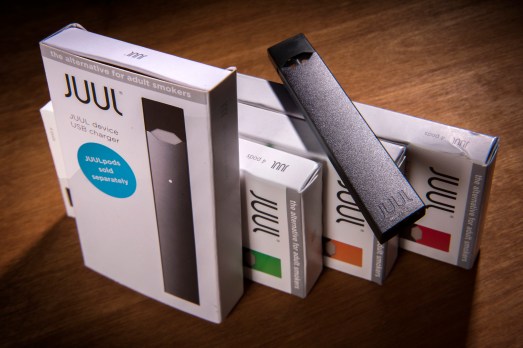
The health behavior that I chose to talk to five people for the Theory of Planned Behavior model about was smoking a Juul, which is basically the same thing as an e-cigarette. They were designed to help people who smoke cigarettes to quit smoking, as the Juul is strictly nicotine as opposed to the tobacco and other harsh chemicals that are in a cigarette. The people I asked were college students, who make up a lot of the Juul community. Based on the responses I got, the majority of people found that the “subjective norm” was that people found no problem with the Juul. They believed that people in college were getting Juuls because all of their friends were getting them as well. Many people don’t seem to have a problem with it. One person, however, believed that people who got a Juul were stupid, due to the fact that they were giving themselves a nicotine addiction to seem cool to their friends. All of these people believed that they ultimately had the control over whether or not they were to get a Juul. If they wanted to be like their friends, they would decide to get one but if they didn’t, they would make the decision not to get one.
Both the people who agreed on Juuls and the people who didn’t found that the decision to get one was their own, even though the decision to stop might not be since nicotine addiction is a really hard thing to quit. The survey helped me to understand why people would decide to get a Juul and why they would decide not to. Many people only decided to get the Juul due to all of their friends having them and wanting them as well, while others decided they didn’t want to get one due to not wanting a nicotine addiction and not really having the funds to keep buying the pods used with the Juul device.
(Word Count: 552)
 Taking Care of YOU